Additive Manufacturing / Process Improvement · 2026
3D Printed Masking Insert
A reusable, additively manufactured masking solution for consistent, repeatable coating protection.
- Role
- Design Engineer
Overview
Project Overview
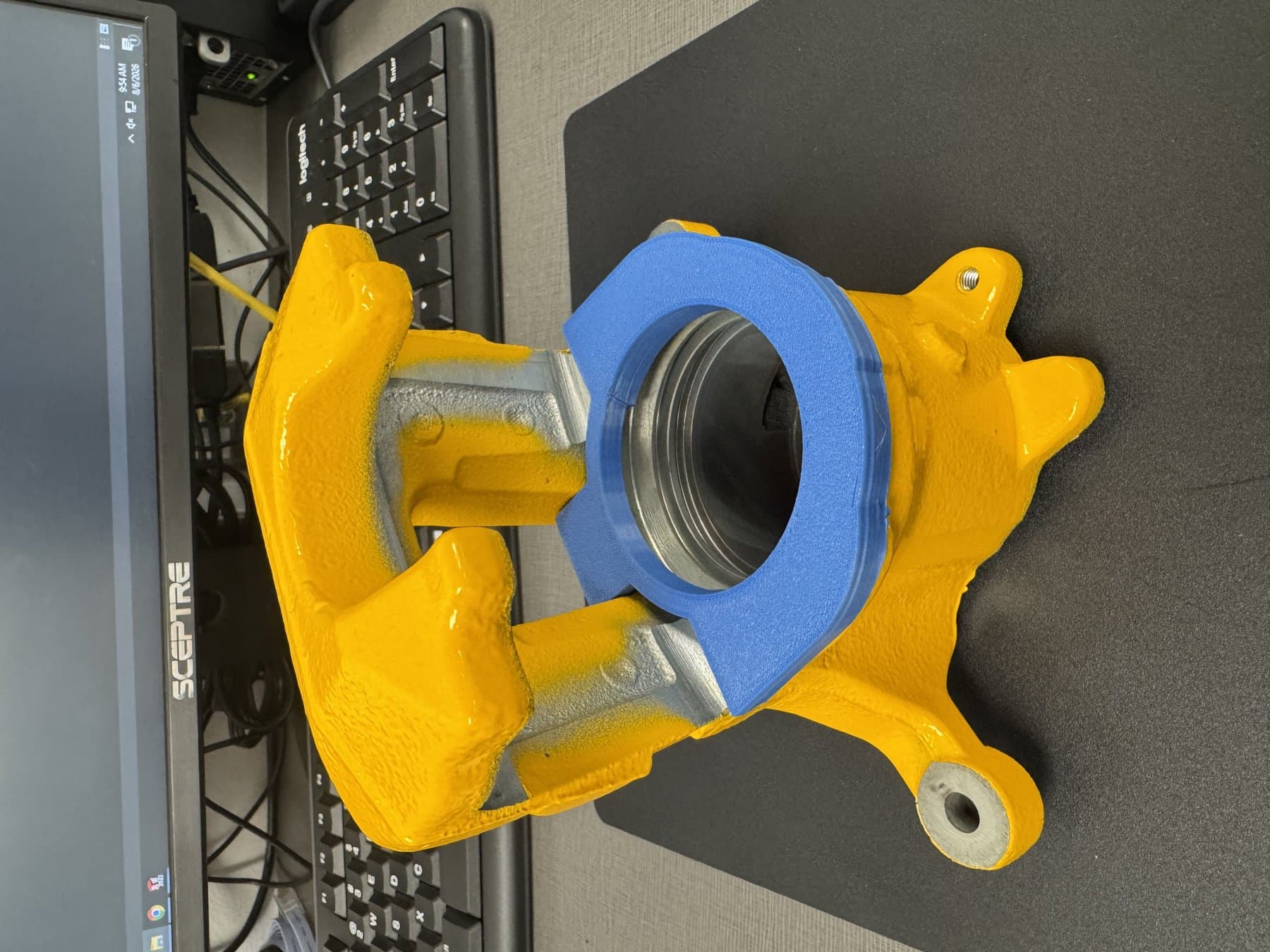
The existing masking method used during electrocoating was difficult to install consistently and required repeated masking operations for each cycle, adding labor and introducing variability into which surfaces were protected. The goal was a reusable insert that could be installed the same way every time and reliably protect critical bore and thread surfaces from coating.
The Problem
Engineering Challenge
The prior masking approach depended on manual technique for consistency, which made results variable and added repeated effort.
- Inconsistent installation across masking cycles
- Repeated masking operations added labor and process time
- Critical surfaces (bores, threaded features) needed reliable protection during coating
- No reusable solution existed for the part geometry
What It Had to Do
Design Requirements
How It Was Built
Design & Development Process
Research
Studied the part geometry and the surfaces that needed consistent protection during coating.
CAD
Modeled the insert and a mounting bracket variant in SolidWorks, targeting a snug, repeatable fit.
Material Selection
Selected a 3D-printable material suited to repeated handling and reuse.
3D Printing
Printed the insert and validated fitment directly against the physical part.
Validation
Installed the insert on production parts and confirmed consistent, repeatable masking results.
CAD Development
Design in SolidWorks
Prototype
Physical Validation
Final Implementation
Result
Impact
Results
Reflection
Lessons Learned
Additive manufacturing made it practical to iterate on fit quickly against the actual part geometry.
A reusable fixture-style solution removed variability that a manual, single-use masking method couldn't control.
Designing two insert variants (ring and bracket) for different masking zones kept the solution adaptable to more than one part feature.
Technology Used
Skills Applied
Keep Exploring